Renaissance of the Old Market TownHuadu Xinhuafang Forges a New Calling Card for Sustainable Urban Renewal and Living Intangible Cultural Heritage Experience & Inheritance
news
2026/09/17 15:32
The red-tiled Qing bricks evoke memories of old marketplaces, while the new charm of intangible cultural heritage heralds a brilliant chapter. Recently, the grand opening ceremony of Huadu Xinhua Fang?Huatian Lian Manor in Guangzhou was held with great ceremony. This historic district, carrying the marketplace memories of generations of Huadu residents, has been officially unveiled after renewal and upgrading, transforming into a new hub for the experience, inheritance, and development of intangible cultural heritage.
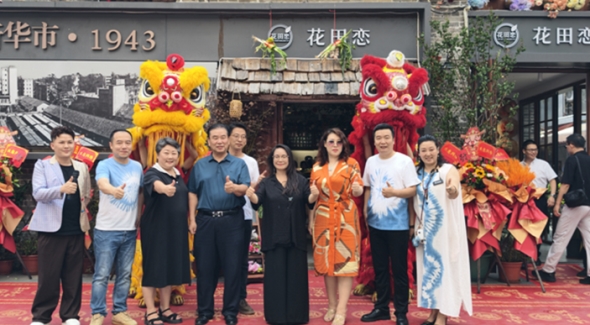
As the province's first successful practice of large-scale autonomous renewal for multi-owner dilapidated commercial properties, the project adheres to the sustainable urban renewal approach, introduces professional operation, and focuses on building a crucial platform for the dynamic experience and inheritance of intangible cultural heritage. It delivers a replicable and scalable "Huadu Model" for urban organic renewal and the integrated development of intangible cultural heritage industrialization.
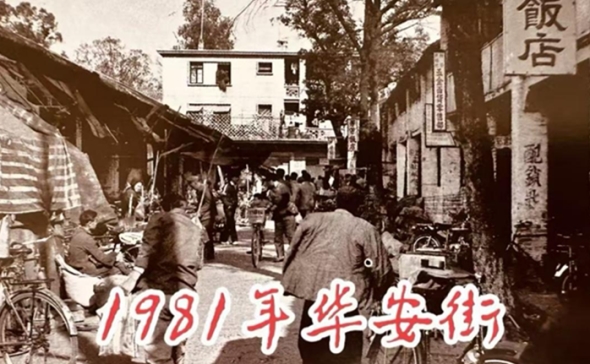
(Historical photos of Xinhua Square)
Exploring the 'Flower Capital Path' of Old Town Renewal from D-grade Dangerous Buildings to Cultural and Tourism Landmarks
The area where Xinhua Fang Manor is located was first built in the 1940s and 1960s, and was once the bustling core market of Huadu. After years of baptism and changes in the times, the buildings in the area have gradually aged and been identified as D-class dangerous buildings. In addition, due to scattered property rights and diverse demands from owners, the progress of the renovation once faced great difficulties.
Huadu District innovatively explores the updated model of "government guidance, market operation, public participation, and shared governance", solves the problem of coordinating multiple property rights, and achieves a 100% signing rate for property owners; Innovate the mechanism of "exchanging future operating rights for construction funds", in which owners transfer their 20-year building operating rights for a fee and entrust them to state-owned enterprises in the district for unified construction and investment operation. Steadily promote the self demolition and self construction of dangerous old properties, achieve a win-win situation for the government, owners, and enterprises, and form a sustainable urban renewal path that promotes historical protection, improvement of people's livelihoods, and coordinated development of industries.
Xu Jingcong, an elderly overseas Chinese who has been operating in this old neighborhood for many years, has a deep affection for this place. After her father returned to China, he took root here and the family has been closely connected to the neighborhood for several generations. Previously, the second floor of the shop was made of wood, and I was afraid of water leakage and collapse every time it rained heavily. Now that the shop has been renovated and the streets are bright, walking in it is particularly reassuring, "Xu Jingcong said to reporters with emotion.
Behind the renovation of shops and the brightening of streets, there is a continuous exploration of urban renewal in Huadu. The prologue to this exploration begins at No. 2 Cluster Street - this residential building, also located inside Xinhua Market, was built in 1976 and was identified as a D-class dangerous house. The government led enterprises to self fund, self renew, and self demolish, becoming the first pilot project for independent renewal of multi property dangerous old houses in the province.
From the independent reconstruction of No. 2 Cluster Street, to the contiguous renovation of Xinhua Square, and then to The overall planning of the future Funing Road area is expanding towards a sustainable path of renewal.
Restore the old as before, preserve the cultural heritage, and activate the 2500 square meter block space
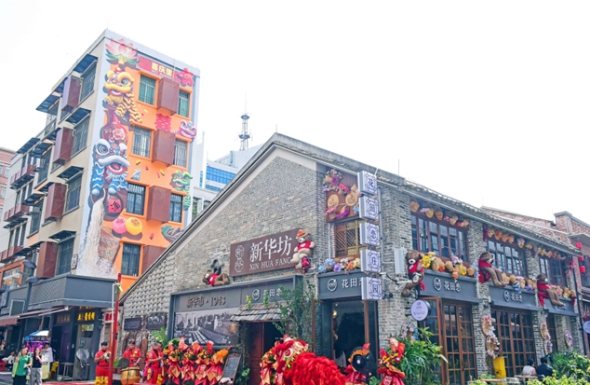
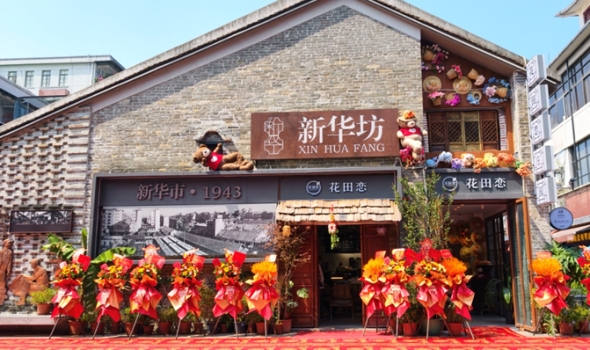
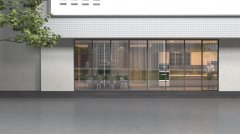
The entire process of project demolition and construction adheres to the concept of "restoring the old to its original state", fully preserving historical features such as green brick exterior walls, red tile roofs, and wooden lattice windows, safeguarding the texture of the old city and the memories of fireworks. Simultaneously adding functional scenes such as rooftop gardens and exhibition spaces, activating over 2500 square meters of block space.
Huadu District has injected professional strength into the upgrading of the business model of Xinhua Fang project by establishing a "government led, state-owned enterprise unified construction, and professional operation" implementation framework. With the revitalization of existing historical space, it has solidified the foundation of sustainable renewal and built a physical carrier for polishing the new business card of intangible cultural heritage living experience inheritance.
Five major intangible cultural heritage workshops have landed, empowering public welfare with greater warmth。
At the opening ceremony, the lion dance, public welfare listing, and unveiling of the intangible cultural heritage research base were carried out in sequence. The Guangdong Province Small and Medium sized Enterprise Club Non legacy Cultural and Creative Research Base, Huadu District Disabled Persons' Entrepreneurship Service Park, and Huadu District Xinhua Street Matching Assistance Lianshan Intangible Cultural Heritage have been simultaneously listed, deeply integrating intangible cultural heritage inheritance with public welfare assistance and matching cooperation.
Xinhua Fang Huatian Love Manor offers handicraft public welfare training courses for disabled people, empowering disadvantaged groups with employment and income growth through intangible cultural heritage skills, and combining cultural inheritance with people's livelihood. Local intangible cultural heritage projects such as Huadu gray sculpture, Guangzhou enamel production techniques, gold embroidered skirt and coat production techniques, bone burning production techniques, walnut inlay techniques, and Huashan fried rice cake production techniques were showcased on site.
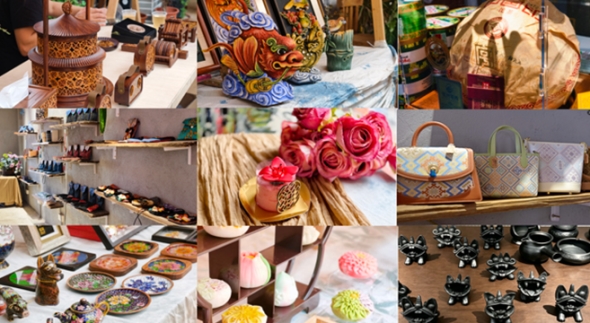
On the basis of deepening the cultivation of local intangible cultural heritage, the park collaborates with high-quality intangible cultural heritage resources from various regions across the country. On the one hand, it introduces Huadu to provide assistance to intangible cultural heritage projects such as Xiangyunsha and Zhuangjin Yao embroidery in Qingyuan Lianshan; On the other hand, it gathers characteristic intangible cultural heritage from multiple provinces in China, including national intangible cultural heritage such as tie dye and Xiaguan Tuocha from Dali Bai Autonomous Prefecture, Suzhou national intangible cultural heritage such as Song brocade, Guangxi Zhuang Yao embroidery, Guizhou Miao embroidery and Guizhou Zhuang brocade, Yunnan Dali Jianchuan provincial intangible cultural heritage wood carving, provincial intangible cultural heritage black pottery, Jingdezhen ceramics, etc. There are five major intangible cultural heritage workshops set up in the park, including tie dye, bead string, Song brocade, Zhuang Yao embroidery, and DIY soap. Supporting facilities include intangible cultural heritage markets, folk performances, and cultural exhibition halls, which extensively gather intangible cultural heritage resources from various regions.
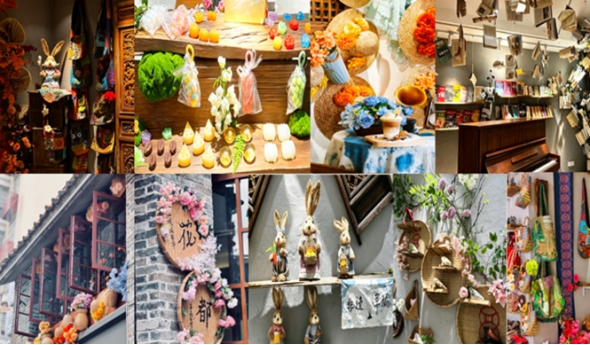
The project follows the path of industrialization, standardization, productization, and cultural and creative development, connects the entire chain of design, production, and sales of intangible cultural heritage, builds a talent training and entrepreneurship service platform, promotes the integration of intangible cultural heritage inheritors with cultural and creative development, expands new tracks such as cultural and creative derivatives and digital cultural and creative industries, promotes the coordinated development of intangible cultural heritage and industry, and continuously consolidates the resource aggregation and industrial supporting capabilities of intangible cultural heritage scattered areas across the country.
Immersive cultural and tourism scenes create a new window for the dissemination of intangible cultural heritage
Huatian Lianxinhuafang Manor aims to create an immersive cultural and tourism consumption scene that is accessible for tasting, playing, and purchasing. It integrates intangible cultural heritage skills experience, cultural and creative product exhibition and sales, specialty catering, and travel photography and check-in, promoting the transformation of old architectural spaces into public cultural experience carriers.
Based on this active experience display platform for intangible cultural heritage, the project will promote the dissemination of intangible cultural heritage in Huadu and even across the country through various channels such as cultural exchange, cross-border e-commerce, and overseas exhibitions, telling the story of excellent traditional Chinese culture.
Urban renewal not only needs to improve physical space, but also needs to safeguard the urban context. The official opening of Huadu Xinhua Fang and Huatian Love Manor is a vivid practice of promoting sustainable urban renewal, revitalizing existing space, and realizing the "reverse growth" of the old city area in Huadu District. It is also a key lever for creating a new business card of intangible cultural heritage living experience inheritance. Next, Huadu District will continue to summarize and promote the practice of independent renewal in contiguous areas, deeply explore the cultural value of intangible cultural heritage, promote the deep integration of sustainable urban renewal with cultural heritage, cultural tourism consumption, and livelihood security, continuously cultivate new driving forces for urban development, retain rural memories in the old city, and revitalize intangible cultural heritage in contemporary times.
The development of Huadu City in Guangzhou has achieved multiple breakthroughs - while the Xinhua Fang Huatianlian Manor, which carries the memories of the old village, has opened, it has also welcomed the millennium old Sanhua Village immersive cultural and tourism check-in destination, and the Guangzhou International Commercial Port has shifted from planning to construction; From improving the quality of rural culture and tourism in Sanhua Village to upgrading the level of international commercial port, Huadu District promotes the deep integration of urban construction, cultural inheritance, industrial development, and livelihood security with systematic thinking. The three major projects are working together to embark on a path of sustainable urban renewal, active inheritance of intangible cultural heritage, and integrated development of culture, commerce, and tourism, injecting strong momentum into the "reverse growth" and high-quality development of the old city area.
As the first independent renewal achievement of multi owner dangerous old commercial properties in the province, Xinhua Square provides a replicable and promotable "Flower City Plan" for urban organic renewal; The hiking route in Sanhua Village has revitalized the millennium village and highlighted the new achievements of rural revitalization; International commercial ports anchor their international positioning and build new support for modern industries. Through the collaborative efforts of multiple projects, we continuously activate new potential for urban development, enabling sustainable urban renewal to resonate with cultural heritage, industrial upgrading, and improvement of people's livelihoods, and writing a new chapter in the high-quality development of Huadu.

| Media partners: |
| US 103 radio broadcast Ra | U.S. regulation news | |